|
|
|
 |
Terminal 6 is the state's only intermodal container terminal, handling both automobiles and containers. |
 |
|
 |
Terminal 5 handles both grain and potash through two modern facilities. There is currently room for one additional dry bulk facility. |
 |
|
 |
Terminal 4 is the Port's oldest operating marine terminal. Redeveloping Terminal 4, including the closure of Slip 1, was envisioned in 1981. The redevelopment of Terminal 4 is a major feature of this master plan update. |
 |
|
 |
Terminal 2 is one of the most modern and efficient multi-purpose cargo facilities on the West Coast, primarily handling breakbulk cargo. |
The preferred alternatives can accommodate a doubling of cargo volumes in the Port's business lines over the next 10 years at existing terminals.
Because of this, it appears that West Hayden Island will not be needed to accommodate marine cargo growth in the next 10 years.
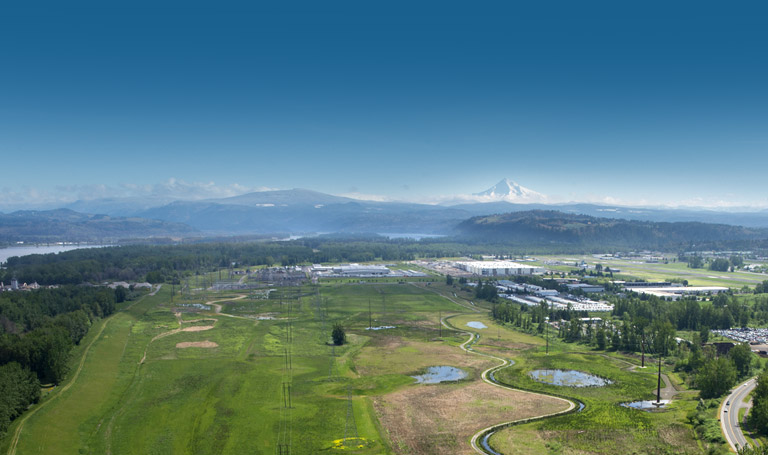
The site will continue as marine reserve property and be used for maintenance dredging disposal and will be managed using the Port's natural resource policies and procedures.
The MTMP 2020 planned for road and rail improvements necessary to accommodate the cargo volume increases within regional road and rail capacities. The Port coordinated the MTMP 2020 transportation planning with the I-5 Trade Corridor study. Necessary transportation improvements include:
- Exit ramp capacity improvements at Marine Drive and I-5
- I-5 capacity improvements through North Portland
- Lombard Overcrossing improvement in Rivergate
- Rivergate Yard Build-out
- A&B Yard expansion adjacent to T-6
- Ramsey Yard construction in Rivergate
- T-4 to Barnes Yard improvements
- Barnes Yard to Bonneville Yard improvements
- Deepen the Columbia River channel from 40 feet to 43 feet
- Deepening of the Terminal 6 container berths will be conducted in conjunction with the Columbia River Channel Deepening Project
The MTMP 2020 identified two scenarios to meet the high cargo forecast during the 20-year time frame. These scenarios focus on the location of soda ash cargo. Relocating soda ash from Terminal 4 to Terminal 5 would complete the facilities at Terminal 5. Terminal 4 would then be available for the development of a bulk grain facility. This scenario would meet the high cargo forecast by fully utilizing the existing marine terminal property.
Redevelopment of Terminal 4 for soda ash would leave one bulk site available at Terminal 5. This bulk site is not suitable as a grain facility due to cargo incompatibility. To meet the high forecast during the 20-year time frame, marine reserve property or another Columbia River site would be needed.
|
|
|
|