|
|
|
|
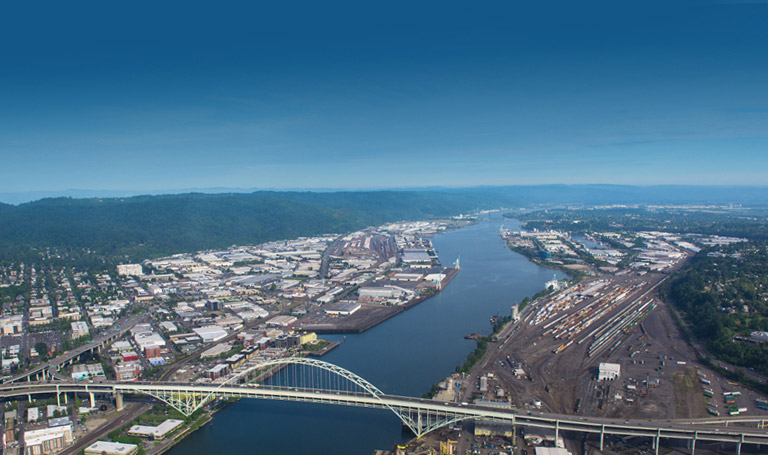
The federal navigation channel stretches from the mouth of the Columbia River near Astoria, Oregon to the railroad bridge between Portland, Oregon and Vancouver, Washington; and from the mouth of the Willamette River to the Broadway Bridge in Portland. However, the proposed Channel Deepening Project is only for the 103.5-mile Columbia River section of the channel. Because of concerns about sediment in the lower Willamette River, any deepening of the 11.6-mile Willamette navigation channel will be undertaken in conjunction with the river's environmental cleanup.
A common misperception is that channel deepening is equivalent to digging a three-foot-deep trench from Astoria to Portland. Actually, "deepening" means removing shoals and the tops of sand waves from the navigation channel. Only 3.5 percent of the Columbia River (from the mouth near Astoria to Portland/Vancouver, which totals 103.5 miles in length) will be affected by the channel deepening.
The channel needs to be deepened to serve the newer, deeper-draft generations of vessels now in service. Deepening the channel will allow these vessels to load more cargo and better utilize their capacities, thereby helping maintain Portland and other Columbia River ports as commercially viable seaports. This is important to regional shippers, who must rely on direct service by these vessels to get their goods to world markets at competitive rates.
No, because the world shipping industry is using larger ships that can carry more goods. It's most cost effective for shippers to load fewer but bigger ships instead of many small vessels. Smaller vessels are being replaced by larger, deeper-draft vessels in services that call Portland nd other West Coast ports. Without channel deepening, direct service in the Columbia River will decline because the larger vessels will not be able to carry enough cargo to economically justify calling here.
By reducing the cost to transport products around the world, the Channel Deepening Project benefits the thousands of Pacific Northwest manufacturers, retailers and farmers who rely on overseas markets for their livelihoods. These benefits of the project are national, regional, and local in scope. For example, bringing container vessels to Portland via the Columbia River channel reduces inland transportation costs by more than $300 for every truckload of cargo shipped to and from the Portland region.
Despite its distance from the open ocean, Portland is an active and major seaport, handling more than 20 million tons of cargo and 1,000 deep-draft vessels every year. Portland continues to thrive as a seaport because it is where ocean-going vessels can most efficiently transfer cargo to and from an extensive inland rail, road, and barge network. There are many other "inland" seaports like Portland throughout the world, including Montreal; Philadelphia; Baton Rouge; New Orleans; Savannah, Georgia; and Rouen, France. Whether it's importing footwear or exporting wheat, Portland's economy is dependent on access to world markets.
|
|
|
|